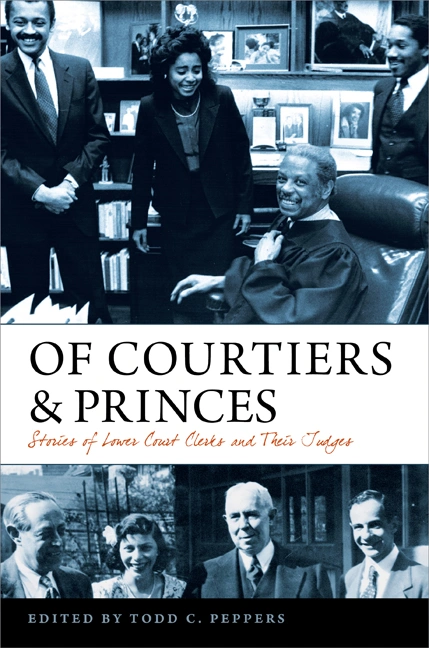
Judge Jed Rakoff delivers a sobering critique of the U.S. criminal justice system, grounded in both courtroom experience and policy analysis. From coercive plea bargains to unchecked prosecutorial power, he makes the case that our system incentivizes expediency over justice. The prose is sharp, the examples real, and the recommendations clear. This book belongs in every criminal law seminar and on the desk of every policy reformer. It does seem important that I’d been practicing interpretation by myself and for myself. I was used to turning things over in my mind and trying out conclusions. Without realizing, I’d learned to trust my judgments while also holding them suspiciously, because they could change, given new information or a new gloss, and yet still for a while had to be respected, perhaps acted upon or argued for. The habit of uncertainty does not preclude conviction. Books do not make us better people automatically, but being a thoughtful reader does open the possibility of conceiving of the self as like a character. It’s not that everyone’s a celebrity, nor that you have Main Character Energy. It’s that characters interact with other characters, and plots, and the world around them; they make decisions, they fail, and they sometimes struggle toward some greater knowledge or perhaps even a great deed. I have been unaccountably lucky, and it feels like a piece of that luck to have early on seen the potential to shape myself as a person among other people, to understand myself as a moral and ethical autodidact. That I spent so much time imagining the lives within a story and evaluating those stories from without—I can’t help thinking that this practice did help me when I was very young and very scared.
Deep down, I admit, I do disdain the classroom and distrust the promise of school itself. (The autodidact’s arrogance rears up!) Few teachers are as honest as the philosophy professor who, during my first semester at Yale, silenced a room of ambitious eighteen-year-olds by saying, “You are being indoctrinated. Yale is indoctrination. Education is indoctrination. So you should choose what you’re indoctrinated with.” It felt like he had broken a taboo, exposing a secret that the institution went to great lengths to hide. I’ve clung to this, whatever the subject: I am being indoctrinated, I can choose what I’m indoctrinated with. It helped me not to take the university and its pretensions too seriously. It did not help my happiness, though, to exist in a chronic state of tension with the university. By the time I graduated, I was a little cauldron of hate.
Despite my admiration for some of my teachers, I never wanted to be one. Unfortunately for me, having a degree from Yale has meant that at certain points in my life, the easiest way to earn money was to hire myself out as a tutor. It paid well and didn’t require much preparation. Yet I loathed it. I hated that money could be a tonic for mediocrity, hated the creepy-crawly sensation that they felt they’d bought me and the equally icky awareness that what I had to sell was not my knowledge, but my self. Why was I putting it in service of rich students whose thinking was at best rudimentary, despite years of expensive education, so that they could maintain their class positions by graduating from the right schools and getting the right jobs? (Money.) But my revulsion was as much spiritual, I admit, as material. My students’ uninterruptible incuriosity and preoccupation with grades tainted something that for me verges on the sacred.
I’d been out of the tutoring business for about three years by the time I began teaching a poetry workshop at Barnard College this past spring. I’d never set foot on Barnard’s campus before my first class, and had been to its sister institution, Columbia University, only twice, to hear outside speakers. I’d read some articles about the conflicts on campus between Zionists and supporters of Palestinian liberation; about the universities’ joint decision to remove Students for Justice in Palestine and Jewish Voice for Peace as official student organizations, supposedly to counter anti-Semitism; and about the recently established Task Force on Antisemitism that one Columbia faculty member had notably described as “the Task Force on, Like, Campus Vibes.”
The campus vibes, I discovered, were bad. “Have you taught here before?” a student asked as I stood outside my classroom waiting to enter. When I said no, the student said, “Welcome to hell.” By the beginning of the spring semester, trust between students, administrators and faculty had shattered, if it had ever existed. I often felt like an eavesdropper; I was, in fact, often eavesdropping, trying to figure out what was happening from sotto voce exchanges between faculty members I didn’t know or from the sharp, impassioned, often hilarious discussions of students between classes. As a one-term adjunct with no history at the school, I was an outsider, always aware of my ignorance and lack of influence, and yet I was also, to the students, allied, however uncomfortably, with the institution.
Poetry is not a class that can eschew the political and keep any honesty about what it is, or what poets do. I would never have wanted to teach a class that pretended otherwise, especially not several months into the Israeli assault on Gaza, not when I was constantly questioning myself about how to approach being an American writer during a genocide enabled by America. I knew before I began that I would have to try to teach something I am perpetually trying to learn: how to be a writer in the world.
My students were a rebuke to me for anticipating a room of shallow opportunists. I was consistently astonished by their thoughtfulness, intelligence, curiosity and verve. The classroom, I realized, could feel like a space of education for the teacher, not because my students taught me from the great wisdom of youth, or something schlocky like that, but because we were engaged in a difficult—though fun, in the way that real learning is, and often funny too—shared endeavor, as we probed both poetry’s capabilities and its limitations. It would breach an ethical boundary, I think, to speak with any specificity about what my students said or wrote or did. Perhaps it is most important, if frustratingly vague, to say that my students made me think, often, that poetry and the classroom were alike in being defined by paradox. They are frivolities that nonetheless matter because people take them out into the world and bring the world back to them, an endless round of translation.
When students at Barnard and Columbia established the first Gaza solidarity encampment, many of them understood themselves to be applying what they had learned in the classroom to that ubiquitous collegiate phrase, “the real world.” That was a prominent narrative: they had learned, and now they were acting, attempting to change the world. Less frequently observed is that the protesting students were also self-educating, or conceiving of themselves as doing so, within an institution of formal education. They did so even as those institutions increasingly opposed and suppressed them. The students seemed to understand themselves—in a way that the university did not, or could not, if it wished to maintain its sense of independence—as part of the same story as people living, suffering and dying in Palestine. If society is often, as Hayy thought, mindless, there can also be a mindlessness to isolation, to pretending that one is not implicated simply because one is not interested in certain forms of sociality, or, in this case, to asserting the isolation of the intellectual realm from the political. The student encampments and protests exposed the inevitable intersection of life and education. In attempting to separate them, often through force, the universities only emphasized how impossible it is to keep them apart.
One night in April, I found myself linked arm in arm, between my best friend and a stranger, in a line of faculty standing between a group of students and police marching up with riot shields. A man with a megaphone repeated robotically that we were trespassing and would be arrested if we did not move. I didn’t move. It didn’t really feel like making a choice, though it was also not much of a risk to me, aside from the usual danger of any interaction with police. It did feel familiar: to place, in any small way, stopping the suffering of others above my own security. Or, as I thought later in that exhausting night, to see myself as insecure while others are suffering. There’s no retreat to the mythical island. There never was.